
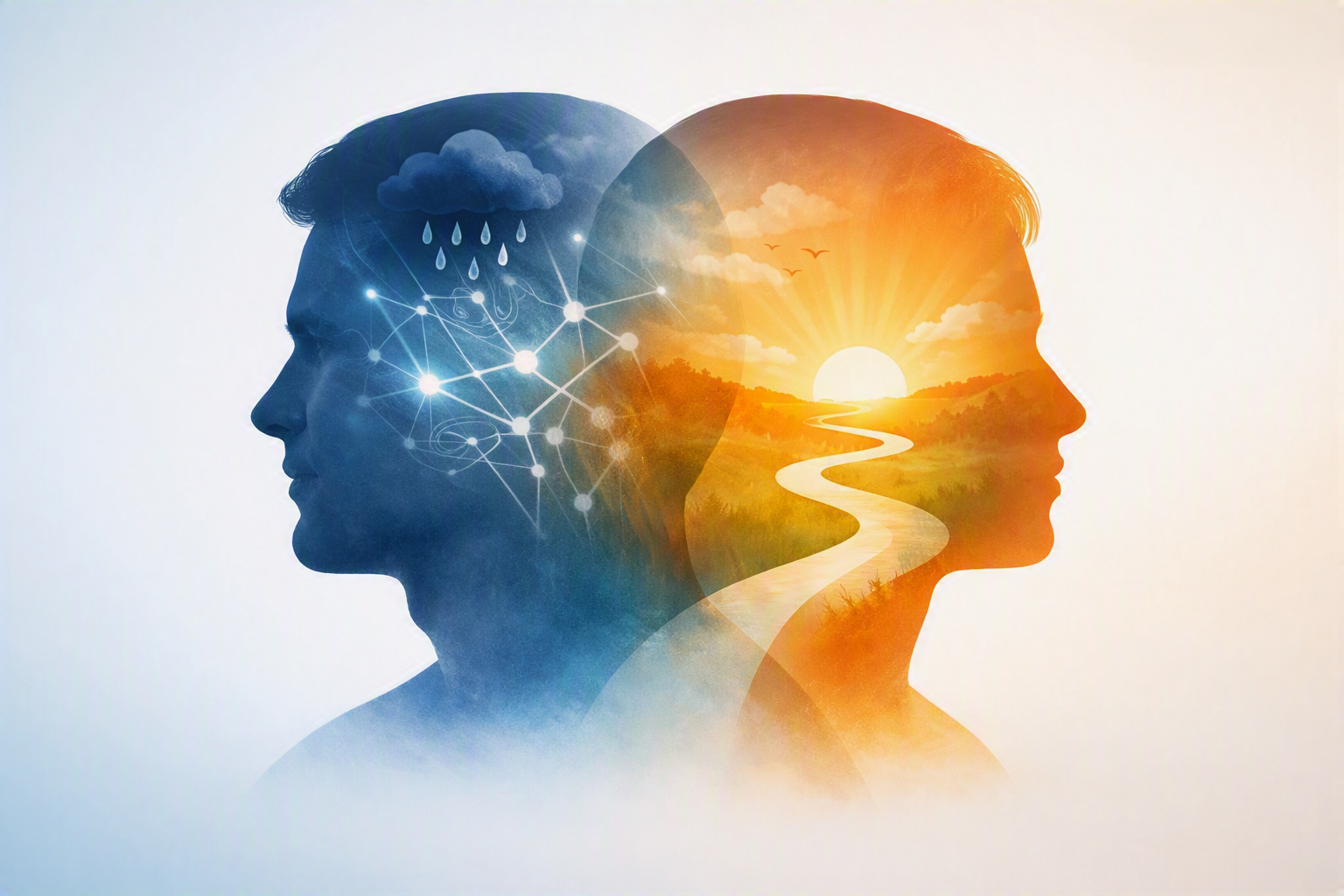
Brilliant Behavioral Health is a psychiatric practice in Sewell, NJ that provides addiction treatment, including medication‑assisted treatment (MAT) for opioid use disorder and comprehensive psychiatric care for co‑occurring conditions. Patients receive evaluations, medication management, and recovery‑focused support through in‑office and telehealth visits.
Answer: What Are Co‑Occurring Disorders?
Co‑occurring disorders (also called dual diagnosis) occur when someone experiences both a substance use disorder and a mental health condition such as depression, anxiety, trauma, ADHD, or bipolar disorder. Treating both conditions together leads to better recovery outcomes, lower relapse rates, and more stable long‑term functioning.
Why Mental Health and Addiction Often Occur Together
Substance use is often the most visible issue in addiction treatment — but rarely the only one. Many individuals use substances to cope with underlying psychiatric symptoms. When those mental health conditions go untreated, recovery becomes significantly harder and relapse risk increases.
Shared Risk Factors
Mental health disorders and addiction frequently overlap due to:
Self‑medication: Substances used to manage untreated depression, anxiety, trauma, or ADHD.
Worsening symptoms: Withdrawal intensifies psychiatric symptoms, making stabilization difficult.
Genetic vulnerability: Increased risk for both mental illness and substance use disorders.
Trauma and ACEs: Stress, trauma, and adverse childhood experiences fuel both pathways.
Treating addiction without addressing the underlying mental health condition is like patching a leak without fixing the pipe.
Common Mental Health Disorders That Co‑Occur With Addiction
1. Depression
Patients often report:
Persistent sadness or numbness
Loss of interest in activities
Hopelessness
Passive suicidal thoughts
Depression can drive substance use as a way to escape emotional pain, and withdrawal can worsen depressive symptoms.
2. Anxiety Disorders
Generalized anxiety, panic disorder, and social anxiety frequently co‑occur with addiction. Alcohol, cannabis, and benzodiazepines are often used to “calm down,” creating dependence and worsening anxiety over time.
3. Trauma & PTSD
Trauma is one of the strongest predictors of substance use. Hypervigilance, nightmares, and emotional dysregulation often push individuals toward substances that temporarily numb distress.
4. ADHD
Often overlooked in addiction treatment, ADHD contributes to:
Impulsivity
Emotional dysregulation
Difficulty with structure
Poor task follow‑through
These challenges make recovery programs harder to engage with and increase vulnerability to substance misuse.
5. Bipolar Spectrum Disorders
Mood instability can lead to episodic binge use, risky behaviors, and difficulty maintaining recovery routines.
Benefits of Integrated Treatment for Dual Diagnosis
When co‑occurring disorders are treated together, patients experience:
Lower relapse rates
Better engagement in therapy
Improved emotional stability
Greater success with medication‑assisted treatment (MAT)
Higher long‑term recovery rates
Integrated psychiatric care isn’t optional — it’s foundational.
How Dual Diagnosis Treatment Works
Effective co‑occurring disorder treatment includes:
Comprehensive psychiatric evaluation
Medication management (SSRIs, SNRIs, mood stabilizers, ADHD treatment, MAT)
Trauma‑informed therapy
Psychoeducation
Lifestyle and behavioral interventions
Collaboration between addiction counselors, psychiatrists, and medical providers
Patients often feel relief simply from understanding why they’ve struggled — and that their challenges are treatable.
A Message for Patients and Families
Co‑occurring disorders are not a sign of weakness or lack of willpower. They are medical conditions that deserve compassionate, evidence‑based treatment. Recovery becomes far more achievable when both the addiction and the underlying mental health conditions are addressed together.
FAQ: Co‑Occurring Disorders
What is a co‑occurring disorder? A co‑occurring disorder means someone has both a mental health condition and a substance use disorder at the same time.
Why do mental health issues and addiction often happen together? They share overlapping risk factors such as trauma, genetics, stress, and self‑medication behaviors.
How does integrated treatment help? Treating both conditions together reduces relapse, improves emotional stability, and strengthens long‑term recovery.
What treatments are used for dual diagnosis? Medication management, therapy, MAT, trauma‑informed care, and coordinated psychiatric and addiction services.
Make an Appointment
If you or someone you love is navigating addiction alongside depression, anxiety, trauma, ADHD, or bipolar disorder, integrated psychiatric care can make all the difference. Our practitioners in Sewell, NJ, serve patients throughout South Jersey, specializing in identifying and treating co‑occurring disorders so individuals can build a stable, sustainable recovery.
